Dear Friends,
In Japan, the arrival of the harvest moon marks a time of serenity and contemplation. As we gaze up at its luminous glow, a sense of calm washes over us. This peaceful time is known as Tsukimi, the moon-viewing festival, where we relax eat dango and appreciate the beauty of the moon.
Since ancient times, the sun has symbolized power and energy, while the moon embodies a gentler, more introspective energy. Just as the harvest moon invites us to unwind, moon salutations, or “Chandra Namaskar” (CHAN-drah nah-MAH-skar) in yoga, guide us in easing into the tranquility of the evening.
And here’s the magic: The moon’s feminine energy symbolizing yin has a strong connection with the female body and its cycles. Practicing moon salutations not only soothes the mind but can also help balance our hormones. Here’s how this serene practice can bring harmony to your life.
Benefits of Moon Salutations
- Calming and Cooling: Unlike the energizing sun salutations, moon salutations are designed to be calming and cooling. They help reduce stress and promote relaxation, making them perfect for evening practice.
- Hormone Balance: The gentle, flowing movements can help calm the nervous system and regulate hormonal fluctuations, especially beneficial for those experiencing hormonal imbalances.
- Activation of the Parasympathetic Nervous System: The gentle, calming nature of Moon Salutations activates the parasympathetic nervous system or the “rest and digest” system.
- Regulation of Circadian Rhythms: Moon Salutations are typically practiced in the evening or at night, aligning with the body’s natural circadian rhythms. This practice helps regulate the production of hormones such as melatonin, which is needed for healthy sleep-wake cycles and hormonal balance.
- Stress Reduction: Moon Salutations emphasize slow, flowing movements and deep breathing, promoting relaxation and stress reduction. By lowering stress levels, this practice can help regulate the production of cortisol.
- Stimulation of Endocrine Glands: Some yoga poses in the Moon Salutations, such as bends and hip openers, can stimulate the endocrine glands, including the pituitary and thyroid glands which are important for hormone production and regulation.
- Mind-Body Connection: Moon Salutations help us stay mindful and in tune with our bodies. Deep breathing is key for managing stress and feeling good. Doing yoga like this makes our bodies more flexible and boosts circulation.
How to Practice Moon Salutations
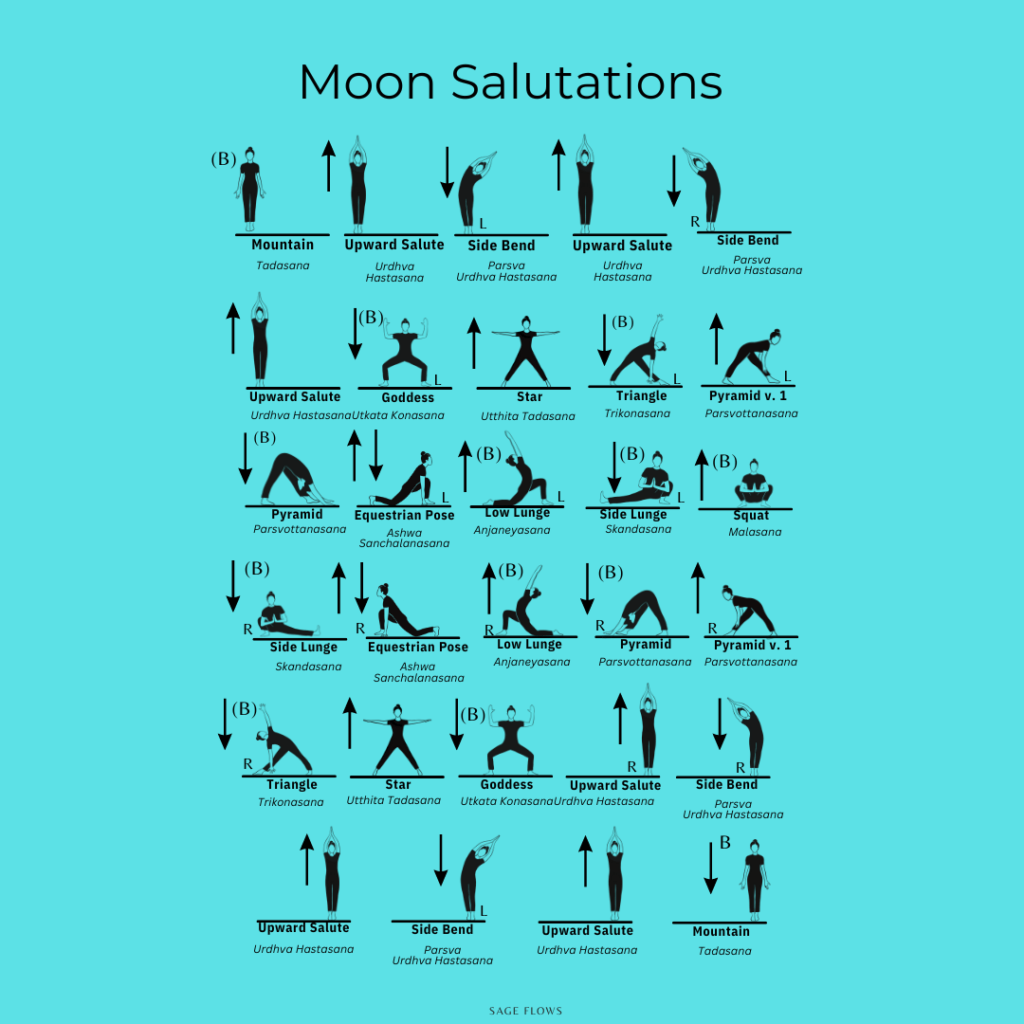
Here’s my illustrated guide to the moon salutation flow. A more comprehensive guide with breathing cues is further below:
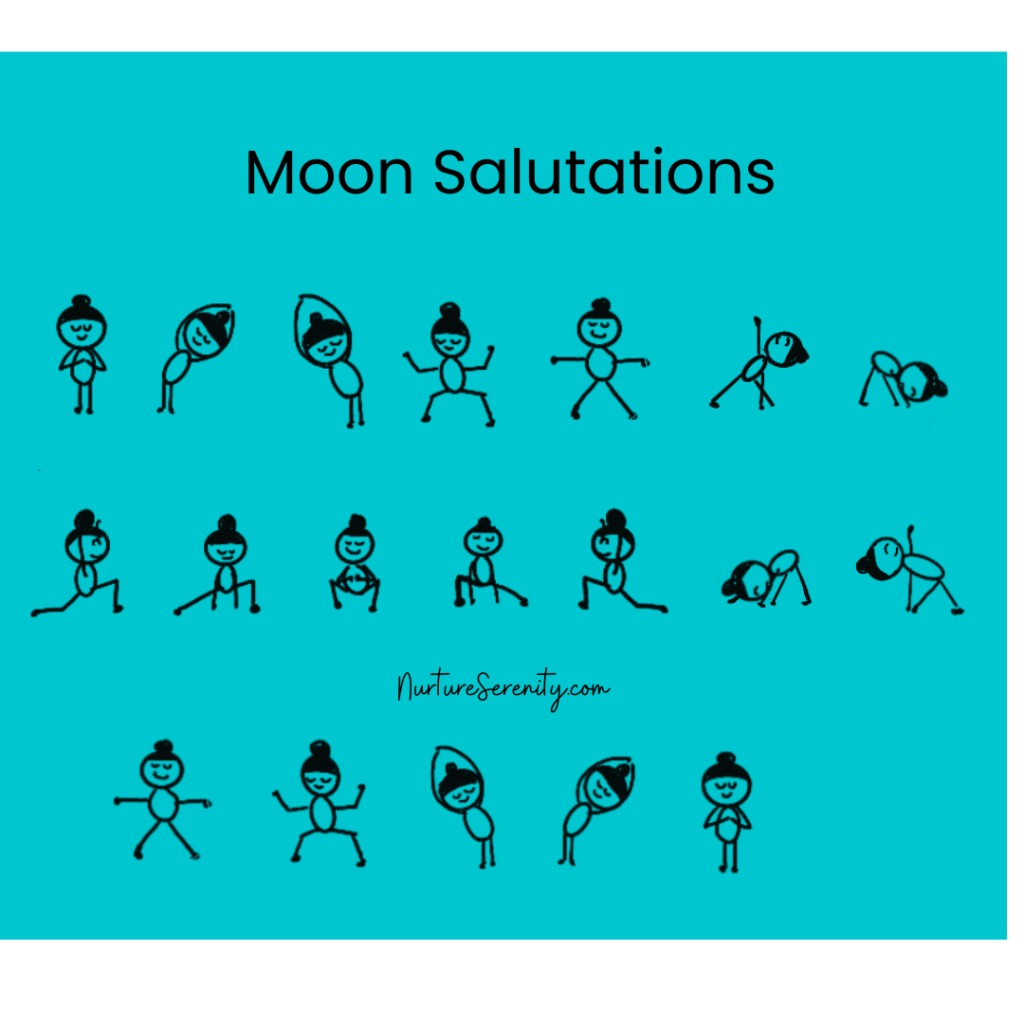
- Standing in Prayer Pose (Pranamasana)/ Mountain Pose: Stand tall, feet together, hands in a prayer position. Take a few deep breaths to ground yourself and come back to body.
- Upward Salute (Urdhva Hastasana): Inhale and raise your arms overhead, stretching upwards.
- Side Stretch (Chandrasana): Exhale and lean to your right, stretching the left side of your body. Inhale back to center, then exhale and stretch to your left.
- Goddess Pose (Utkata Konasana): Step your feet wide apart, turn your toes out, and bend your knees. Lower your hips into a squat, and bring your arms into a cactus shape.
- Star Pose (Utthita Tadasana): Straighten your legs, extend your arms out to the sides, and spread your fingers wide.
- Triangle Pose (Trikonasana): Turn your right foot out, keep your legs straight, and extend your right arm down to your shin or the floor, and your left arm up towards the sky.
- Pyramid Pose (Parsvottanasana): Turn to face your right foot, bring your hands to your hips, and fold forward over your right leg.
- Equestrian Pose (Ashwa Sanchalanasana): Bend your right knee and step your left foot back, lowering your left knee to the floor. Lift your arms overhead and look up.
- Low Lunge (Anjaneyasana): Lift your left knee off the floor, coming into a low lunge with arms overhead.
- Seated Squat (Malasana): From the low lunge, lean into your left leg and move into a seated squat position, bringing your hands into a prayer position at your chest.
- Low Lunge (Anjaneyasana): Shift your weight back to your right leg and return to a low lunge, lifting your arms overhead
- Side Lunge (Skandasana): Shift your weight to the right, straighten your left leg, and bend your right knee deeply, coming into a side lunge position.
- Repeat on the other side: Move through the sequence starting with the left side.
Tips for Your Practice
- Create a Calm Space: Practice in a quiet, comfortable space where you can relax.
- Focus on Your Breath: Deep, slow breathing helps enhance the calming effects of the practice.
- Listen to Your Body: Move gently and respect your body’s limits. The goal is to relax and rejuvenate, not to push yourself too hard. No need to be perfect just be where you are.
- Full Moon: I like to tap into that lunar energy and do moon salutations when there is a full moon.
By adding the moon salutations into your routine, you can enjoy the calming benefits of this practice while supporting your hormonal health. So, find a quiet spot, roll out your mat, and let the gentle flow of Chandra Namaskar guide you to a place of balance and tranquility.
Disclaimer: Please remember to listen to your body and consult with a healthcare professional if you have any concerns before starting any new exercise routine.
Next, you might enjoy: How I Lowered High Cortisol: In Simple and Practical Steps